
Babel: from the biblical tower to a party game with friends
Meet Babel, a free phone party game for 4–14 players: coded words, hidden roles, teamwork and bluffing around one shared phone.
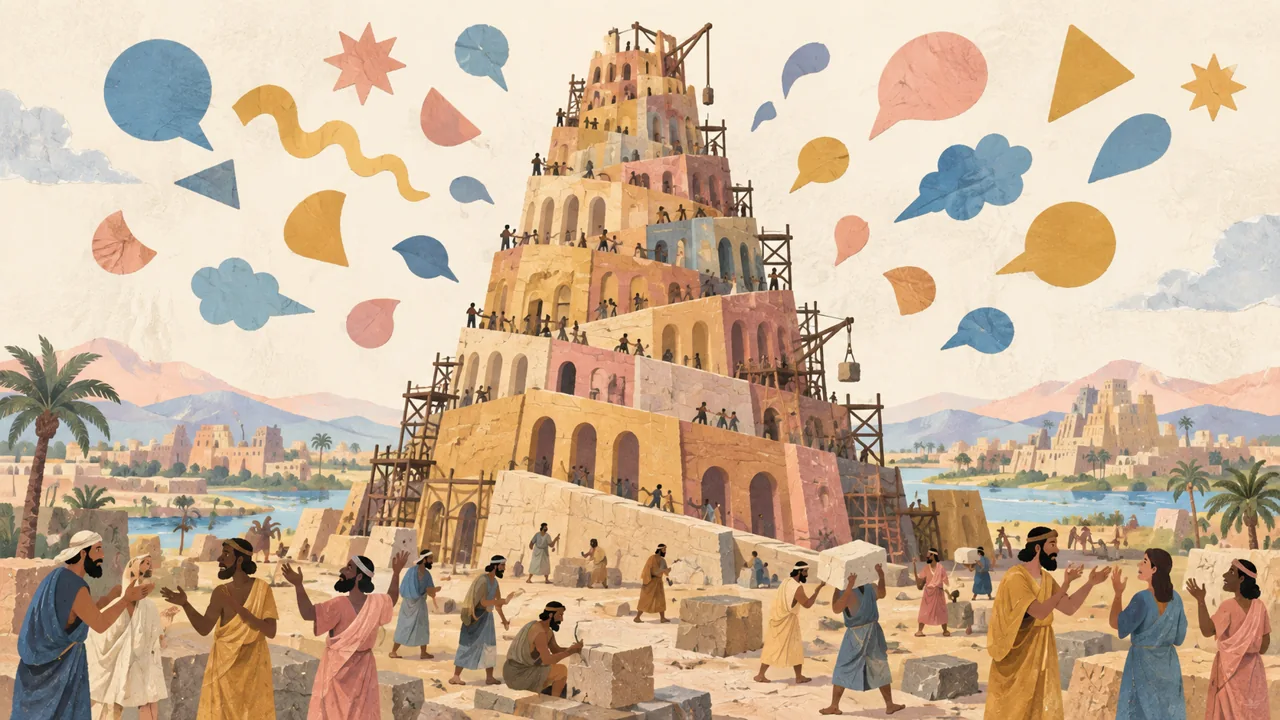
One phone passes around the room. The building work seems to be going well, and everyone insists they made the right choice. Then letters turn into symbols. Someone hesitates. Someone else has an explanation ready a little too quickly. Babel, the baræ party game, asks a simple question: can you still understand each other when you no longer know whom to trust?
This free party game on your phone combines words, hidden roles and bluffing. Its name draws on a familiar biblical story, but you do not need Bible knowledge to play.
The Tower of Babel and a shared language lost
In Genesis 11:1–9, people share one language and build a city and tower to make a name for themselves and avoid being scattered. God confuses their language. Unable to understand one another, they stop building and disperse. The story connects Babel with that confusion.
The game uses this idea of misunderstanding to explore words and trust. It is a playful interpretation, not a reenactment of the biblical account.
A phone party game for 4–14 people in the same room
Babel runs free in your browser. Gather 4–14 players around one shared phone. Each person reads their screen privately before passing it on. Between turns, the attention returns to the people around you.
On your turn, a category and two words appear. You have ten seconds to pick the matching word. A wrong answer or an expired timer adds a construction defect. Words become harder to read as symbols replace letters. Each symbol keeps the same letter correspondence throughout the game.
The phone handles the turns; your reactions create the atmosphere. A long pause or a very confident explanation can spark a debate. But one mistake proves little: someone on your own team may simply have struggled to decode a word.

Teamwork and competition: two hidden sides
If you are looking for a cooperative party game, here is the distinction that matters. The current Babel game does not include a fully cooperative mode where everyone wins together. It has two opposing teams:
- Builders still understand the shared language. They win when all the Misunderstood players have left the building site.
- The Misunderstood see fully coded categories and words. They try to stay hidden and win when no Builders remain.
You share an objective with your own team while opposing the other. The roles are secret, so recognizing your allies is part of the challenge. If defects reach the game's threshold, a Builder may become Misunderstood. Trust is not settled once and for all.
Why Babel works as a bluffing game with friends
A hidden-role game is interesting when everyone has clues but nobody has the whole picture. A hesitation might come from coded words, the timer, or a simple reading mistake. The loudest person is not necessarily the best informed, and a quiet player is not necessarily suspicious.
After the choices and round summary, discuss and vote to remove someone from the building site. You may talk about behavior and suspicions, but must not reveal the category, name or spell the words, or describe your screen. These boundaries leave room for observation and persuasion.
Keep the rivalry inside the game. Challenge an idea rather than a person, and give quieter players a chance to speak. Looking back at a completely wrong hunch can be one of the best parts of the evening.
How to set up a Babel game night
- Gather your group. Sit where you can easily pass around one charged, connected phone.
- Explain both teams. Describe their goals and remind everyone that roles are private.
- Give a practice example. Explain how a category and two words work without exposing a real round's information.
- Protect the screens. Only the current player looks at the phone. Save discussion for the group phase.
- Start building. Follow the instructions for choices, the round summary and voting.
With fourteen people, make room for those who speak less. With four, allow a first round to learn the rhythm. The aim is to get comfortable by playing, not spend the evening in a rules meeting.
When to bring Babel to the table
Choose Babel when your group enjoys observing, discussing and defending a hunch. It can fit after dinner, at a group meetup or during a Christian game night. The story explains the theme, but the game does not quiz you on verses or biblical characters.
For biblical guessing and acting, try REMEZ !. For a change of pace after Babel, J’annonce ! challenges you to deliver the number of answers you announced. You can also browse all baræ games to match your group's mood.
Questions before you play
Do you need to know the Babel story?
No. It gives context to the name and setting. You only need to understand the teams' goals and follow the on-screen instructions.
Do you need to download an app?
No. Babel opens in a browser on one shared phone. Everyone plays together in person.
Is it cooperative or competitive?
It has opposing teams and hidden roles. There is a shared goal within each camp, but no shared victory for every player in the current version.
How many people can play?
The version checked on September 17, 2026 supports 4–14 players.
Ready to find out who still understands you? Play Babel, or see the rules and game previews before passing the phone.